Voice and AI Assistant Search for Local Businesses: Practical Steps
AI assistants can surface local business details, but their sources and ranking methods vary. Start with accurate profiles, useful pages, genuine reviews, and measurement.
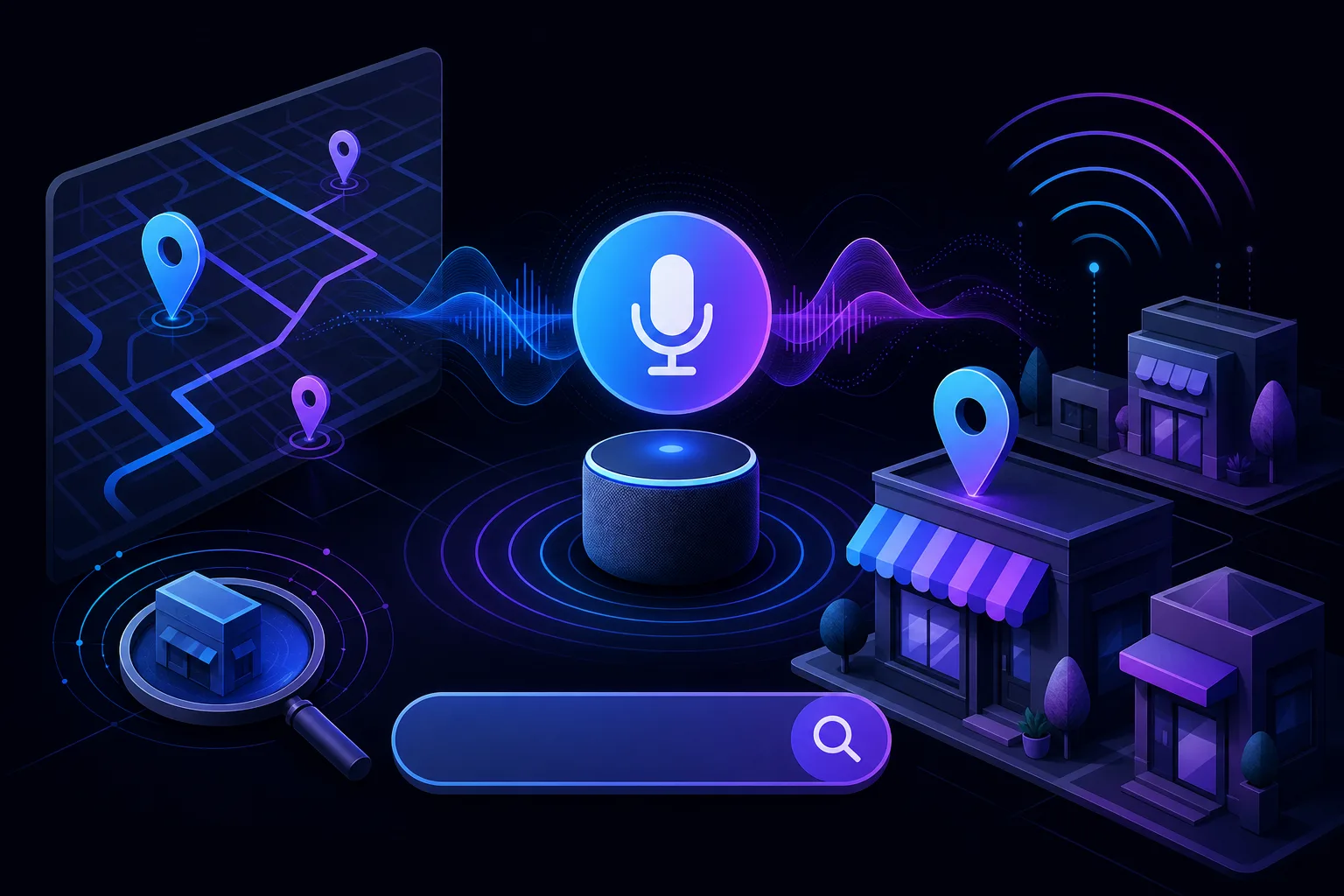
TL;DR: Voice and AI assistants can surface local business information, but each product works differently. Keep your business details accurate and assess how your customers actually search. The fix is less mysterious than the hype suggests, but it does require deliberate action.
What Happened
For years, voice search was the "next big thing" that never quite arrived. People talked about optimizing for "near me" queries and conversational keywords. Most of it was noise.
Then something actually changed.
Conversational products can answer some local questions. Their features and available data vary by provider, location, and time; there is no public evidence here for how many local customers use them first.
The behavior shift isn't theoretical anymore. People ask their phones, their smart speakers, and their AI chat windows for business recommendations. They may get business suggestions, links, or a conventional results page. Some will then contact a business.
This is not the same as ranking on page one of Google. The format and sources vary by product. Google says its generative Search features rely on core Search systems; do not assume a separate set of secret local factors.
Why It Matters
An answer interface may show fewer options at once, but presentation varies by product and query.
When someone Googles "emergency electrician West Palm Beach," they see ten results and a map pack. They have choices. When someone asks Gemini or ChatGPT the same question in a conversational way, they often get two or three names, sometimes just one. A customer may still find you through other results or channels.
Answer formats affect which options customers see, but there is no single cross-platform ranking to compare with a conventional search-results position.
The other issue is attribution. When a customer discovers you through an assistant and calls directly, web analytics may not show the referral source. That makes attribution incomplete. Ask new customers how they found you and review referral data where available.
There is also a trust dynamic worth noting. When a human-sounding assistant recommends your HVAC company by name, that carries different psychological weight than a blue link. Do not assume AI-referred visitors convert better without measuring your own leads.
For any business that depends on local customers, which is most small businesses, this channel deserves real attention. You can see how businesses in similar situations have handled this pivot at our client case studies.
Find out what your site is leaving on the table Get your free audit
What We Don't Know Yet
Anyone who tells you they have cracked the AI assistant algorithm for local search is either guessing or selling something.
Here is what is genuinely uncertain right now:
How much weight each platform gives to each data source. The sources and ranking methods differ by platform and may change. Consult each provider’s current documentation rather than relying on a fixed source list. No provider here documents a universal weight for reviews, citations, website authority, or structured data.
Whether paid placement is coming. Ad formats change. Check current product documentation before assuming paid placement in a particular local assistant answer.
Long-term user behavior. Voice search adoption has surprised forecasters in both directions over the past decade. It is possible AI assistant queries for local businesses plateau quickly. It is also possible they become the dominant channel in two years. Nobody knows.
How to measure it cleanly. Right now there is no UTM parameter for "Gemini sent me." Businesses are flying blind on attribution. Platforms may eventually provide more visibility, or they may not.
If you want a baseline read on where your business stands before things get clearer, our free AI readiness audit is a practical starting point.
What to Do About It
The practical starting point is to keep your public information and website useful and accurate. Then check the products your customers use.
Lock Down Your Google Business Profile
Google Business Profile is important for Google local discovery, but no universal ranking of AI-assistant data sources is established. Your profile needs to be complete, accurate, and actively maintained.
That means: correct hours including holiday hours, the right primary category and relevant secondary categories, photos that are recent and not stock images, services listed with actual descriptions, and any available profile features that are relevant and supported.
An inaccurate Business Profile can mislead customers on Google surfaces. Keep it current without assuming how every assistant uses it. Google Maps But Not Regular Search Results covers a related wrinkle worth reading.
Get Your Reviews in Order
Reviews help customers evaluate businesses; the effect of count and recency on any specific AI answer is not publicly established.
You do not need to automate fake reviews. You need a simple system to ask real customers. That could be a follow-up text with a direct link, a card in your waiting room, or a line in your invoice email. Consistent small effort beats occasional blitzes.
Also respond to your reviews, including the bad ones. Responding thoughtfully helps customers see that you are attentive; do not assume a direct AI ranking benefit.
Structured Data on Your Website
Accurate LocalBusiness structured data can support eligible Search features, but Google says structured data is not required for generative AI Search. Clear page content remains essential.
If you add LocalBusiness markup, follow Google’s documentation and include only accurate, supported details. If your web setup makes this complicated, it is worth a conversation with someone who knows what they are doing. See what our web design service handles on this front.
Write Content That Answers Real Questions
Clear answers to real customer questions help people and may be useful to search systems. Publication does not guarantee training use or citations.
For a repair shop, that might be a FAQ page about common appliance problems and what they cost to fix. For a family law attorney, it might be a clear page explaining what happens at a first consultation and roughly what retainer fees look like in your state.
This is not about volume. It is about clarity and specificity. A single page that genuinely answers a customer's real question is worth more than ten thin blog posts padding word counts. Our guidance on local service landing pages that convert gets into the specifics of how to structure this.
Audit Your Citations Across the Web
Different platforms may display information from different sources. Keep your phone, address, and hours accurate on the major places your customers use; minor formatting variation is not itself proof of an AI penalty.
Run a citation audit. Check key profiles and directories directly to verify your business name, address, and phone number. Fix the discrepancies. This is tedious work but it matters more than most business owners realize.
Think About Conversational Phrasing
Spoken queries can be conversational, but query style varies by person and device. "What's a good plumber near me who does same-day service" is a voice query. "plumber West Palm Beach" is a typed query.
Your content, your GBP description, and your FAQ sections should include the kind of phrases people actually say out loud. Not keyword-stuffed paragraphs, but natural sentences that answer natural questions. If you are not sure what questions your customers ask, look at your own call transcripts, your email inbox, or just ask your front desk staff.
For a deeper look at how AI-powered tools can help you manage this without adding hours to your week, explore SmartAleck's AI automation services.
The bottom line: AI assistants may help customers discover local businesses. Accurate profiles, useful pages, and genuine reviews are sound fundamentals. None guarantees placement in any assistant answer.
Find out what your site is leaving on the table
SmartAleck's free AI readiness audit scores your search presence and shows the exact gaps costing you customers. Two minutes, no sales call.
Frequently asked questions
Do AI assistants like ChatGPT actually recommend local businesses?
Some AI assistants can answer local-business questions, depending on the product and location. The specific sources and presentation vary; test the tools your customers use.
Is voice search the same as AI assistant search?
Not exactly. Voice input is a way to submit a query. An assistant may answer conversationally or show links; the underlying retrieval and ranking methods vary by product.
How do I know if AI assistants are sending me customers?
Attribution is incomplete: some referrals can be measured, while calls and walk-ins may require asking customers how they found you. For now, combine available referral data with customer-reported discovery sources.
Do I need a completely different SEO strategy for AI search?
No. Accurate profiles, genuine reviews, and useful website content are sensible foundations; do not assume every assistant uses the same signals or weights. You are not starting over. You are tightening what you should already have in place.
How important are reviews for AI assistant recommendations?
Reviews matter to customer trust and Google says more reviews and positive ratings can help local ranking. There is no universal 80-versus-10 rule for AI assistants.
What is LocalBusiness schema and do I actually need it?
LocalBusiness schema is structured data that can describe your business details to supported search features. Google says structured data is not required for generative AI Search. Add valid LocalBusiness markup where appropriate, alongside clear and accurate visible content.
You May Also Like
View All Posts
NAP Consistency: Why Your Name, Address & Phone Must Match
Wrong addresses or phone numbers on major listings can confuse customers. Learn how to audit and correct your business details across your site, Google Business Profile, and directories.
Why Your Service Pages Rank But Your Homepage Doesn't
Your service pages climb Google's results while your homepage sits in the dark. This is usually a focus problem, not a technical one. Here's why Google treats your homepage differently and what you can do to fix it without blowing up your site.
Why AI Chatbots Cite Some Businesses and Ignore Others
AI chatbots don't pull business names out of thin air. They surface businesses that have built a clear, consistent, and well-sourced digital footprint. Here's what separates the cited from the invisible, and what you can actually do about it.
Tracking Local SEO Progress: 8 Metrics That Actually Signal Growth
Rankings screenshots feel like progress but rarely predict revenue. This listicle breaks down 8 local SEO metrics worth tracking, what each one actually tells you, and how to read them without lying to yourself.